What Happened
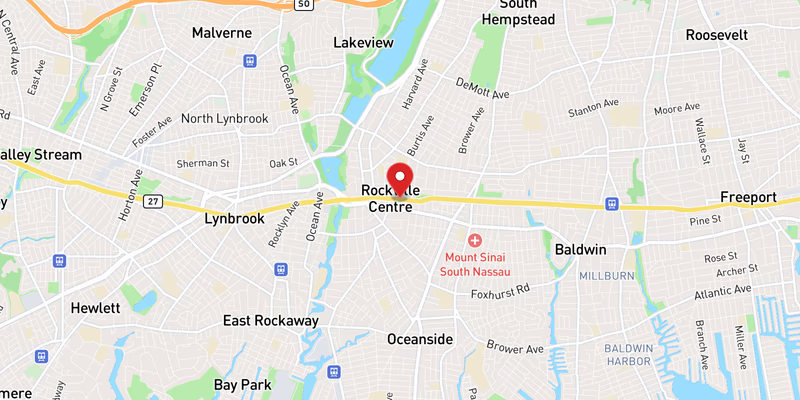
Flooding forced the closure of the left lane on eastbound NY 27 in Nassau County on Saturday, July 18, 2026. The incident was classified as minor in severity, with a single lane taken out of service due to water accumulation on the roadway. No injuries or vehicle collisions were reported in connection with the flooding closure.
The lane impact was limited to the left lane of the eastbound carriageway. No specific cross-street, exit number, or milepost was provided in the initial incident record, and the responding agency had not publicly identified a precise restoration time as of the report.
The flooding on NY 27 was not an isolated event on Saturday. A parallel flooding incident was recorded the same day on NY 25, also rated minor, indicating that wet conditions were affecting multiple major Long Island corridors simultaneously. Drivers on both routes were advised to use caution.
Location & Road Context
NY 27 — also known as Sunrise Highway through much of its length — is one of Long Island’s primary east-west arterials, carrying heavy commuter and recreational traffic across Nassau and Suffolk counties. The eastbound direction serves drivers heading toward the South Shore and the Hamptons, particularly on summer weekends when traffic volumes surge.
NY 27 has accumulated 1,037 recorded incidents in the Long Island Traffic database, making it one of the most consistently disrupted corridors on the island. In the 24 hours surrounding this flooding event alone, the road also saw overnight bridge work, two separate construction closures, and a roadwork event on July 17 — a dense cluster of disruptions that compounded the hazard posed by the wet-weather lane closure. Nassau County as a whole has 861 recorded accidents in our local database, reflecting the county’s high traffic density.
Broader Impact
Saturday’s flooding on NY 27 coincided with a moderate crash on I-495 and a moderate crash on the Southern State Parkway from the day prior, suggesting elevated road hazard conditions across the region during the mid-July period. Drivers on Long Island’s major summer corridors should anticipate that standing water in travel lanes — even when rated minor — can significantly reduce stopping distances and increase the risk of hydroplaning, particularly at highway speeds.