What Happened
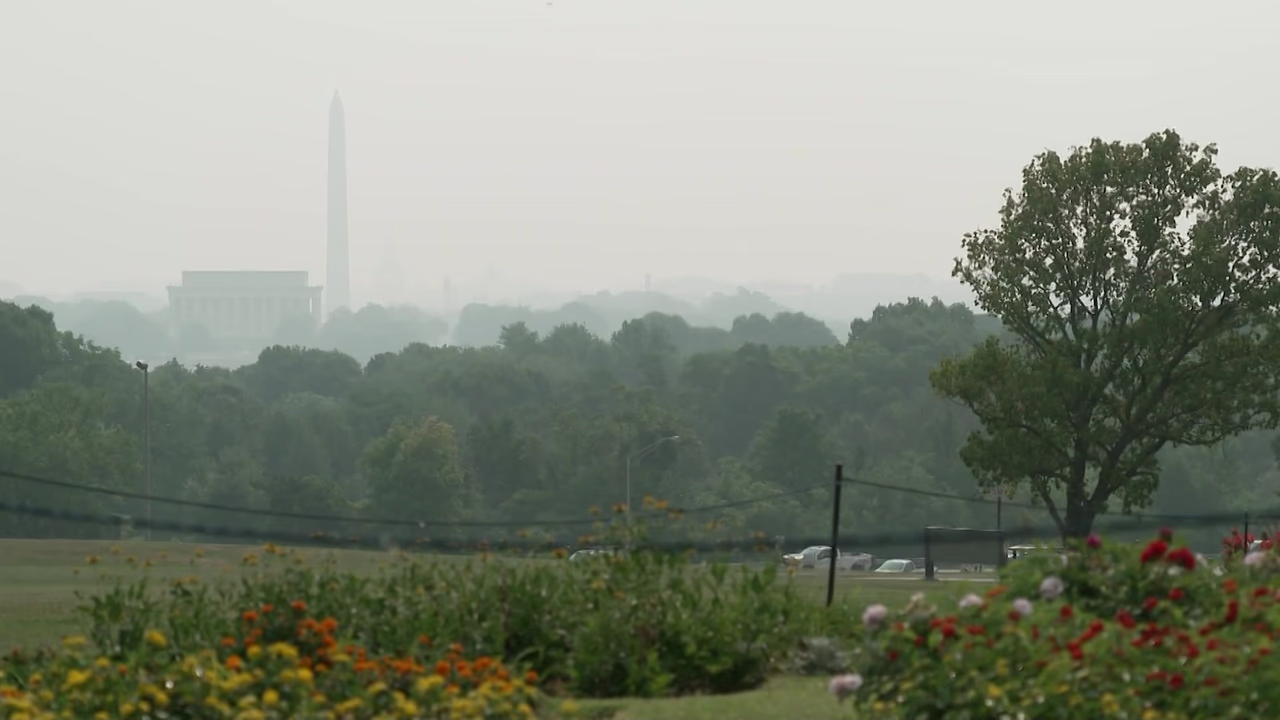
Health officials across the country — including on Long Island — issued urgent warnings on Friday, July 17, 2026, alerting residents that wildfire smoke drifting from nearly 3,500 active fires in Canada and northern Minnesota is triggering air quality alerts and poses a significant threat to cardiovascular health, according to News 12 Long Island.
The United States Environmental Protection Agency warned that smoke from those fires can travel hundreds of miles, degrading air quality and harming the health of people far removed from the fires themselves. Officials stressed that the danger is compounded by simultaneous extreme heat gripping the region — a pairing they described as a potentially dangerous combination.
Dr. Alana Lewis, a general cardiologist with Northwestern Medicine, spelled out the cardiovascular stakes plainly. “It can have a serious impact on cardiovascular health, and we’re talking anything from a heart attack to a stroke to increasing your risk for a heart failure exacerbation,” Lewis told News 12 Long Island. She added that the smoke-and-heat combination can also trigger cardiac arrest in people with underlying health conditions — a risk she called especially pronounced on days with degraded air quality.
According to Dr. Lewis, the populations most vulnerable to the dual threat include people with asthma, COPD, high blood pressure, diabetes, existing heart conditions, a history of stroke, congestive heart failure, and certain types of irregular heart rhythms. For those individuals, Lewis said the advice is straightforward: “Knowing what your risk factors are, knowing if you’re susceptible, knowing if you do have a heart condition, and as much as is possible, especially on days like today, I would stay inside as much as you can.”
For those who must venture outdoors, Dr. Lewis recommended wearing a mask or an N95 respirator to filter airborne pollutants. She also stressed the importance of staying hydrated, noting that dehydration heightens susceptibility to health complications — a risk made worse by the region’s humidity levels. People with asthma, she added, should keep their prescribed inhalers on their person at all times. Anyone experiencing chest discomfort, shortness of breath, a racing heart, extreme perspiration, or nausea was urged to seek medical attention without delay. “Don’t ignore it because this could be a really dangerous time right now,” Lewis said.
The Centers for Disease Control and Prevention advised residents to monitor conditions in real time by visiting Airnow.gov and entering their ZIP code to check local air quality readings.
Location & Road Context
The air quality emergency is not isolated to a single roadway or municipality — it spans Long Island and the broader New York metropolitan region, as smoke from the Canadian and Minnesota fires blankets the area. News 12 Long Island separately reported that an air quality alert was issued for Long Island specifically, with residents advised to limit outdoor exposure during the highest-risk hours. Outdoor commuters on heavily trafficked corridors — including those along the Long Island Expressway and Southern State Parkway — face prolonged exposure to the compromised air simply by sitting in open or slow-moving traffic.
Long Island’s dense population, which includes a significant proportion of older residents and those with chronic health conditions, makes the region particularly susceptible to the overlapping threats of smoke and heat. Local communities dealing with the heat surge were separately documented by News 12, which reported that Long Islanders were trying to beat the heat as temperatures continued to climb on the same day the air quality warning was issued.
Broader Impact
The convergence of wildfire smoke and extreme heat on July 17, 2026 represents an escalating public health pattern that Long Island has confronted in recent summers. With nearly 3,500 simultaneous fires burning across Canada and northern Minnesota — a figure cited by health officials as the backdrop for this alert — the scale of smoke production far exceeds what local or regional air filtration systems can offset. For Long Islanders with heart conditions, the practical implication is clear: days with red or purple air quality index readings on Airnow.gov should be treated as medical risk events, not merely weather inconveniences.