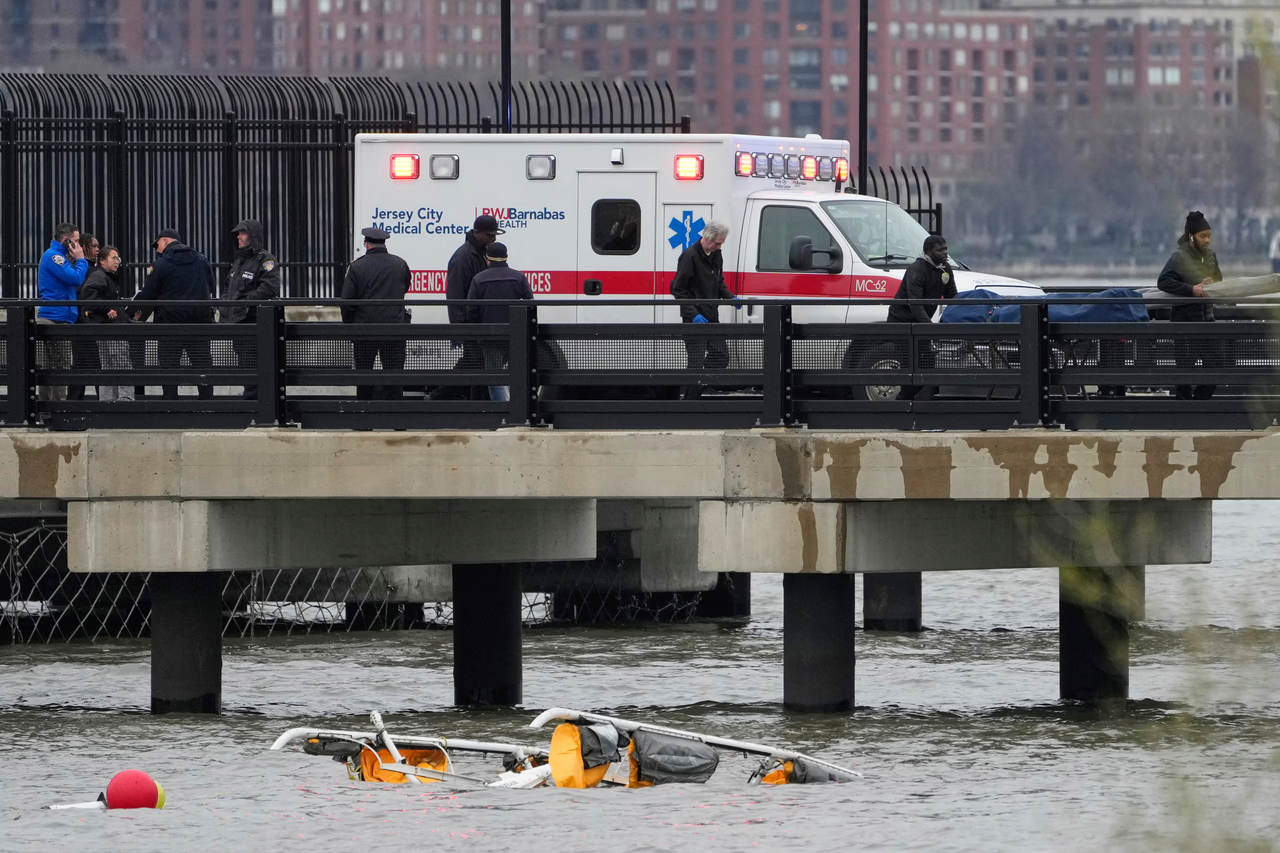
What Happened
A sightseeing helicopter that plunged into the Hudson River on April 10, 2025 — killing all six people aboard — struck multiple birds before it went down, federal investigators said Thursday. According to News 12 Long Island, the National Transportation Safety Board released reports on July 16, 2026 describing physical evidence and witness accounts consistent with a bird strike, including the remains of several geese found embedded in the helicopter’s wreckage.
The victims were a Spanish family and their pilot. Agustin Escobar, 49, a Siemens business executive from Spain, died along with his wife, Mercè Camprubí Montal, 39, and their three children: Victor, 4; Mercedes, 8; and Agustin, 10. The pilot, Seankese Johnson, 36, a U.S. Navy veteran who had received his commercial pilot’s license in 2023, also perished. No one on board survived.
The NTSB reports, as described by the Associated Press and published Thursday via News 12, detail how witnesses reported seeing the helicopter strike several birds before it broke apart in midair and plummeted into the river. A prior NTSB report had already documented the helicopter breaking apart before impact, and the newly released findings now point to a bird strike as the likely triggering event in that catastrophic sequence.
The Federal Aviation Administration has stated that helicopters are particularly vulnerable to bird strikes because they operate at low altitudes — the same altitudes where large birds such as geese are commonly found over waterways like the Hudson. While helicopter bird strikes are considered unusual events, the FAA has acknowledged they can be devastating when they do occur, a point underscored by the complete loss of life in this crash.
The passengers were aboard what was described as a sightseeing helicopter, the type of commercial tourism flight that operates regularly over New York City and along the Hudson River corridor. The Escobar family — Spanish nationals visiting New York — were among the many tourists who take such flights each year for aerial views of the Manhattan skyline. The crash renewed sharp scrutiny of the commercial sightseeing helicopter industry, which operates dozens of flights daily over one of the most densely populated urban areas in the world.
Location & Road Context
The crash occurred in the Hudson River in New York City on April 10, 2025. The Hudson River corridor is a high-traffic route for commercial sightseeing helicopter operators, who use it to provide tourists with views of the Manhattan skyline and surrounding landmarks. The FAA has noted that these low-altitude flight paths — the same ones that make the tours attractive to visitors — place helicopters in the flight paths of waterfowl, including the Canada geese that are abundant along the New York metropolitan waterfront year-round. For more on regional aviation and transportation incidents across the New York area, see Long Island Traffic’s roads coverage.
Investigation & Legal Proceedings
The NTSB’s reports released Thursday, July 16, 2026, represent the federal agency’s most detailed findings yet regarding the April 2025 crash. According to News 12 Long Island, the reports incorporate both physical forensic evidence — goose remains found in the wreckage — and eyewitness testimony placing birds in the helicopter’s path before it went down. A prior NTSB report had already established that the aircraft broke apart in midair prior to hitting the water; Thursday’s release adds the bird-strike dimension to that timeline.
No criminal charges have been reported in connection with the crash. The investigation remains a federal matter under NTSB and FAA jurisdiction. Lawmakers have separately moved to address the safety questions raised by the accident, with legislators pushing for tougher regulations governing sightseeing helicopter operations in the New York area, per News 12’s earlier reporting.
Broader Impact
The crash and its aftermath have already reshaped the policy conversation around commercial sightseeing flights in the New York region. New Jersey’s governor formally requested additional restrictions on nonessential helicopter flights over the Hudson following the April 2025 disaster, and federal lawmakers have held commemorations for the six victims while pushing new safety rules for the industry. The NTSB’s bird-strike finding adds a specific and previously underappreciated hazard to that regulatory debate — one the FAA has long flagged for low-altitude rotorcraft but that had rarely resulted in mass-casualty events before this crash.