What Happened
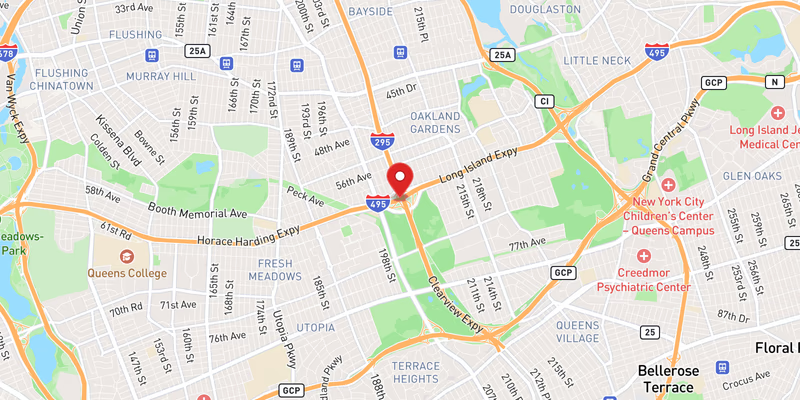
A minor crash blocked two right lanes of the eastbound Long Island Expressway (I-495) in Queens County on Tuesday, July 14, 2026. The lane closures created a disruption along one of the most heavily traveled corridors in the New York metropolitan area during what was already an active day on the roadway.
Details regarding the specific vehicles involved, the number of occupants, and the precise location along the expressway — including the nearest exit or mile marker — have not been released. No serious injuries were reported in connection with the collision.
The two right lanes affected would have pushed eastbound traffic toward the center and left lanes, a pinch-point that routinely produces significant queuing on this section of the LIE, particularly during peak travel windows. The right lanes are typically used by commuters preparing to exit toward eastern Queens and the Nassau County border.
Location & Road Context
The crash took place on I-495, the Long Island Expressway, in the eastbound direction within Queens County. The LIE is the primary artery connecting New York City to Long Island, carrying hundreds of thousands of vehicles daily and serving as the main route for commuters, freight, and visitors heading to Nassau and Suffolk counties.
Our database records 1,644 incidents on I-495, with multiple crashes logged on the expressway in the days immediately surrounding this event. Compounding conditions on July 14 included active roadwork on I-495 and road-sweeping operations logged the same day, meaning motorists were already navigating a reduced-capacity environment before the crash added further lane restrictions. Queens County accounts for 159 recorded accidents in our local incident database.
Broader Impact
The July 14 crash is the latest in a cluster of I-495 incidents recorded across July 12–14, 2026, including a moderate-severity crash on July 12 and at least four additional minor collisions on the same stretch across those three days. The concentration of crashes alongside concurrent roadwork and sweeping operations underscores the elevated risk that lane-narrowing maintenance work can create on a corridor already running at high traffic volumes — a pattern that transportation agencies have repeatedly flagged as a contributor to secondary crashes in active work zones.