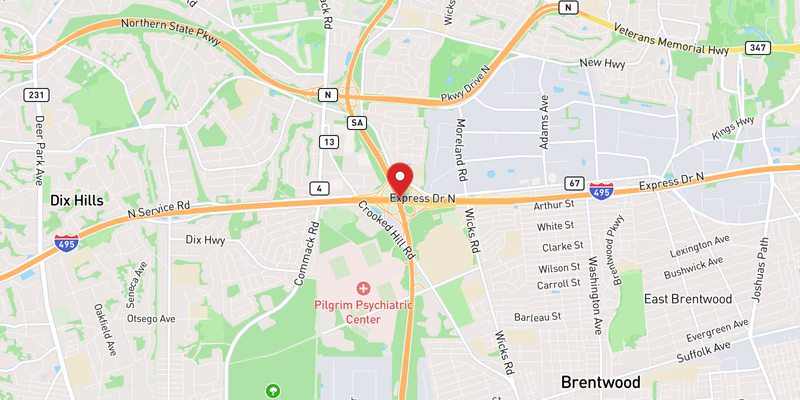
What Happened
A minor crash blocked the right shoulder of westbound Interstate 495 in Suffolk County on Monday, July 13, 2026. The incident was recorded in traffic monitoring systems with a lane impact limited to the right shoulder, meaning through-lanes remained technically open, though merging traffic and rubbernecking typically produce secondary slowdowns in similar incidents on this corridor.
No specific time of day, number of vehicles, or names of those involved have been included in the available incident record. The severity designation of “minor” suggests no life-threatening injuries were reported at the scene. Additional details — including the responding agency and exact milepost — have not been confirmed in the available data.
Location & Road Context
Interstate 495, the Long Island Expressway, is the primary east-west spine of Long Island and one of the most heavily trafficked highways in the United States. The Suffolk County segment carries a high volume of commuter, freight, and recreational traffic daily, particularly during summer months when beach and Hamptons-bound travel surges. Long Island Traffic’s database lists 1,622 recorded incidents on I-495, and Suffolk County accounts for 608 recorded accidents across all roads in the county’s incident log.
Right-shoulder blockages on the LIE, while less disruptive than full lane closures, routinely generate slowdowns as drivers instinctively reduce speed and shift lanes when emergency or disabled vehicles are present on the shoulder. The westbound direction is particularly sensitive to delay during morning and midday hours as commuters and travelers return toward Nassau County and New York City.
Broader Impact
This crash occurred during an active period for I-495 in Suffolk County: Long Island Traffic recorded five separate crashes on the same highway on July 12, 2026 — including incidents rated minor and one rated moderate — as well as multiple active roadwork operations along the corridor. Drivers using the LIE in Suffolk County should remain alert to rapidly changing conditions, particularly near active construction and shoulder-work zones where lane patterns can shift with little warning.